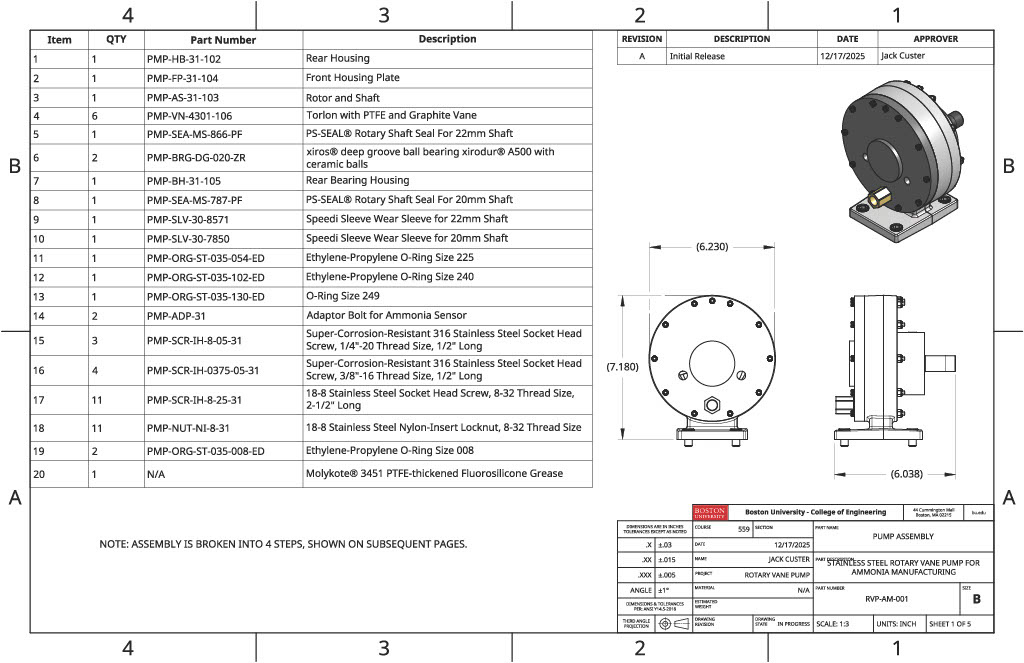
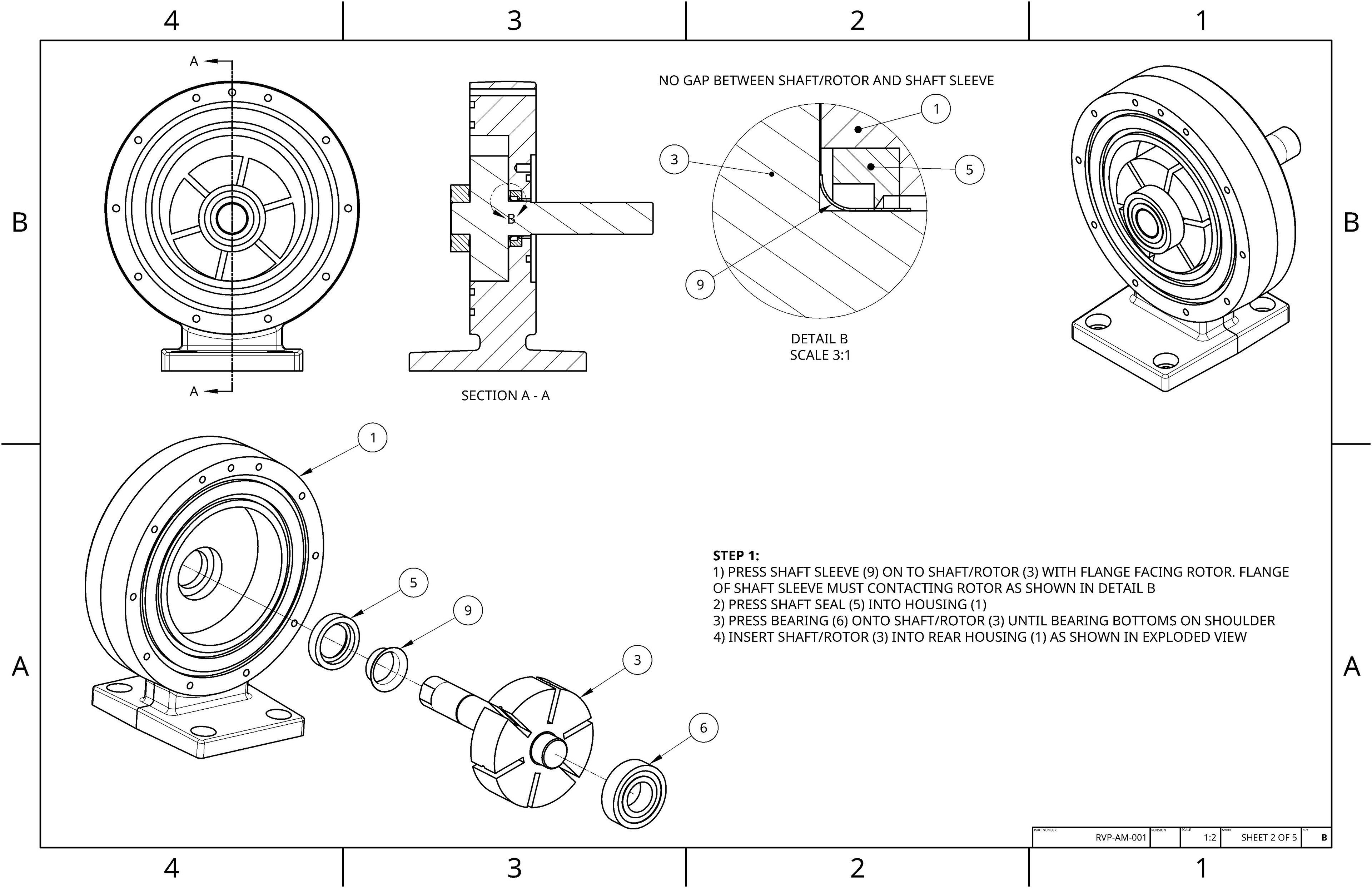
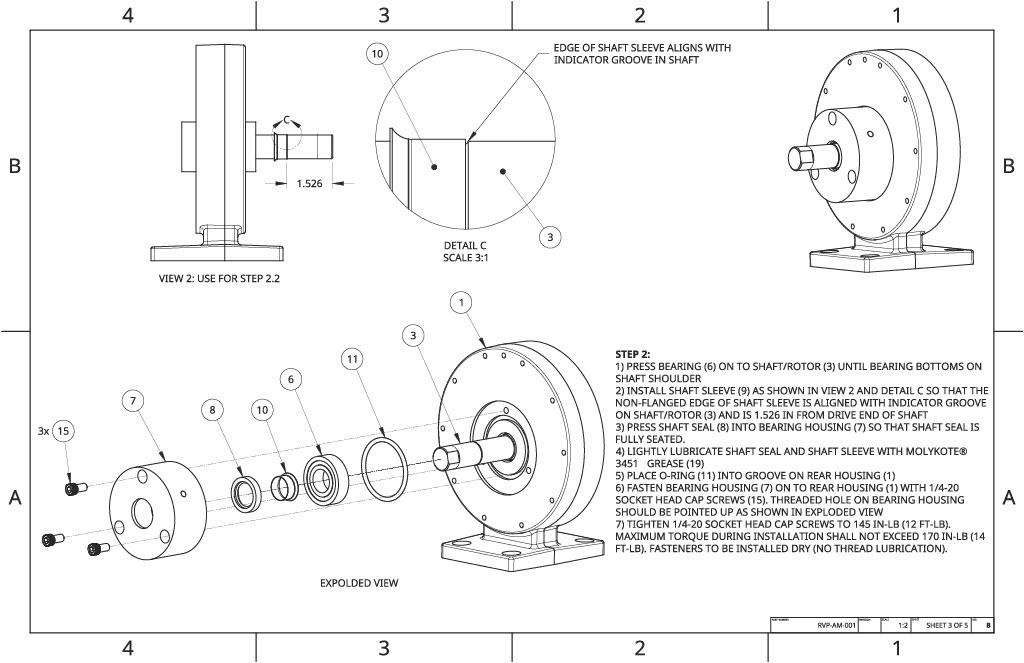
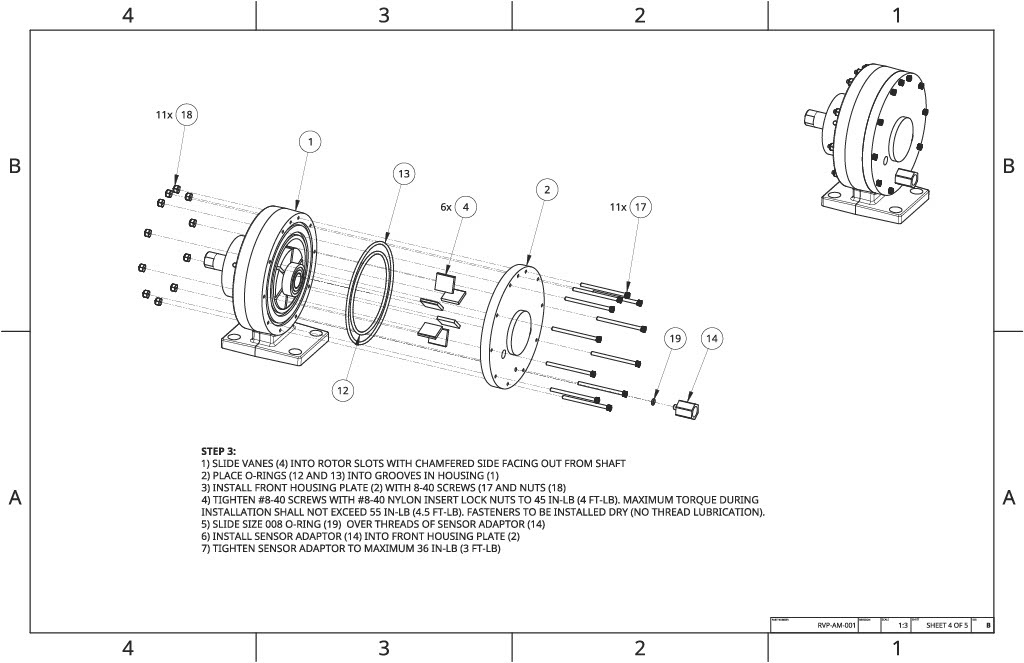
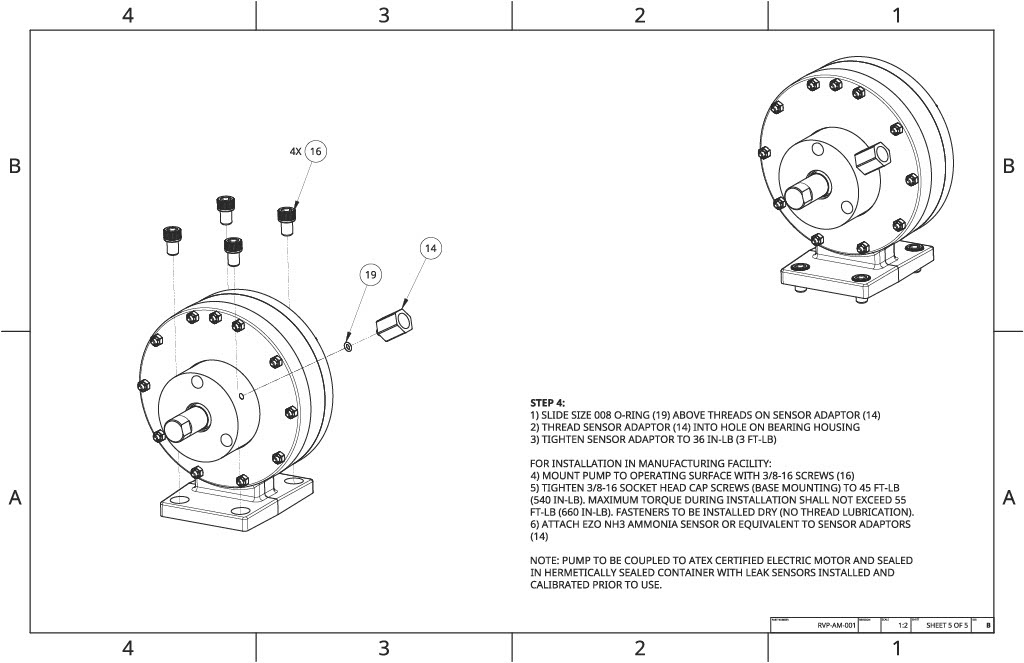
Above: Assembly instructions for the redesigned rotary vane pump for liquid ammonia manufacturing facility.
Overview
This project involved redesigning and fully documenting a rotary vane pump for Boston University’s ME559: Manufacturing Processes for Design and Production. Beginning with a demonstration pump that we machined and assembled to learn pump operation and manufacturing constraints, our three-person team developed a production-ready design to meet specified service conditions. The redesign emphasized functional performance, manufacturability, and assembly optimization. Deliverables include a complete CAD model (Onshape), manufacturing drawings with GD&T informed by tolerance analysis (RMS stack-up), and step-by-step assembly instructions suitable for contract manufacturing. Design choices were guided by cost analysis, tribology and wear assessment, and mechanics of materials and fluids.
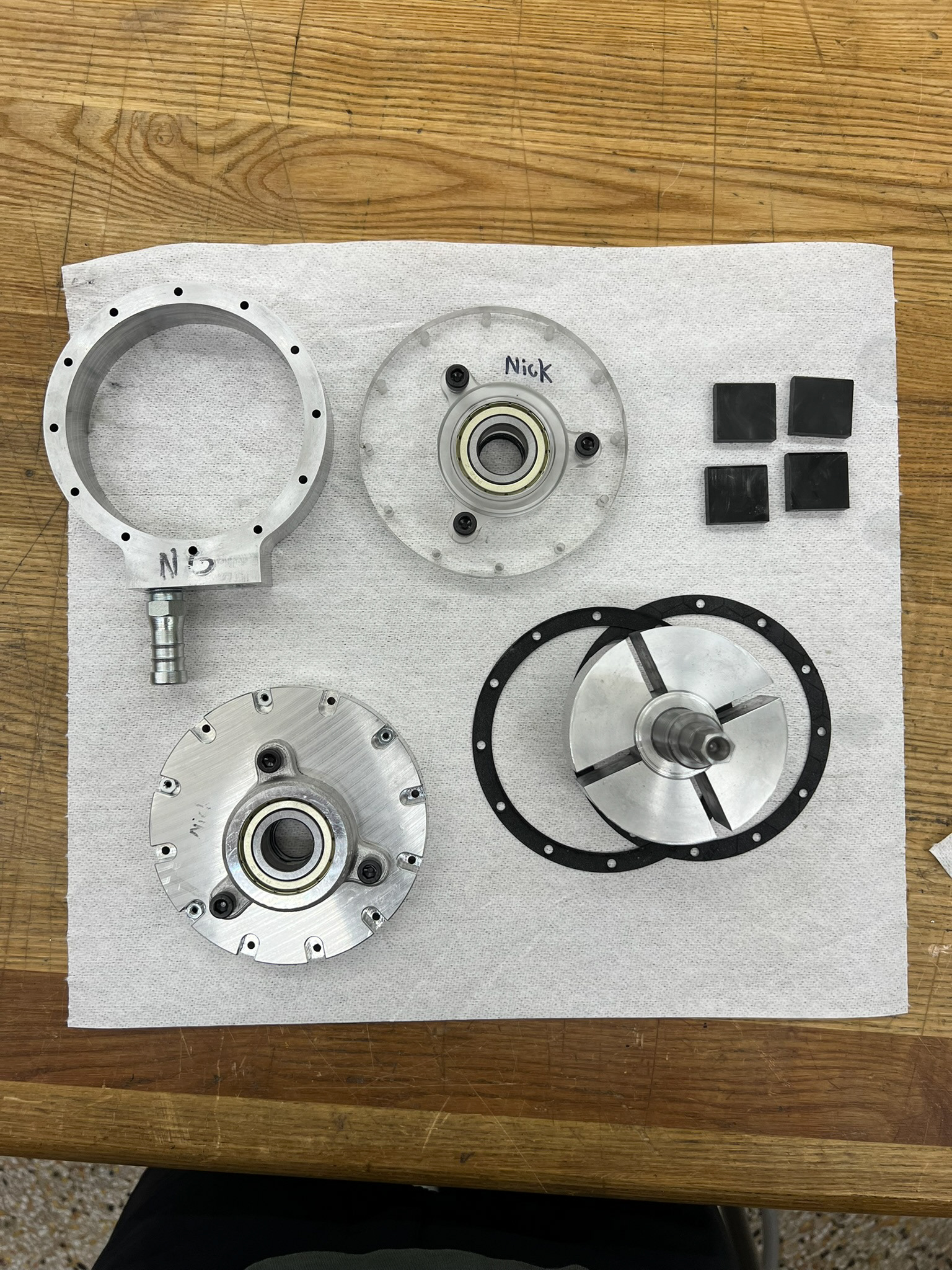
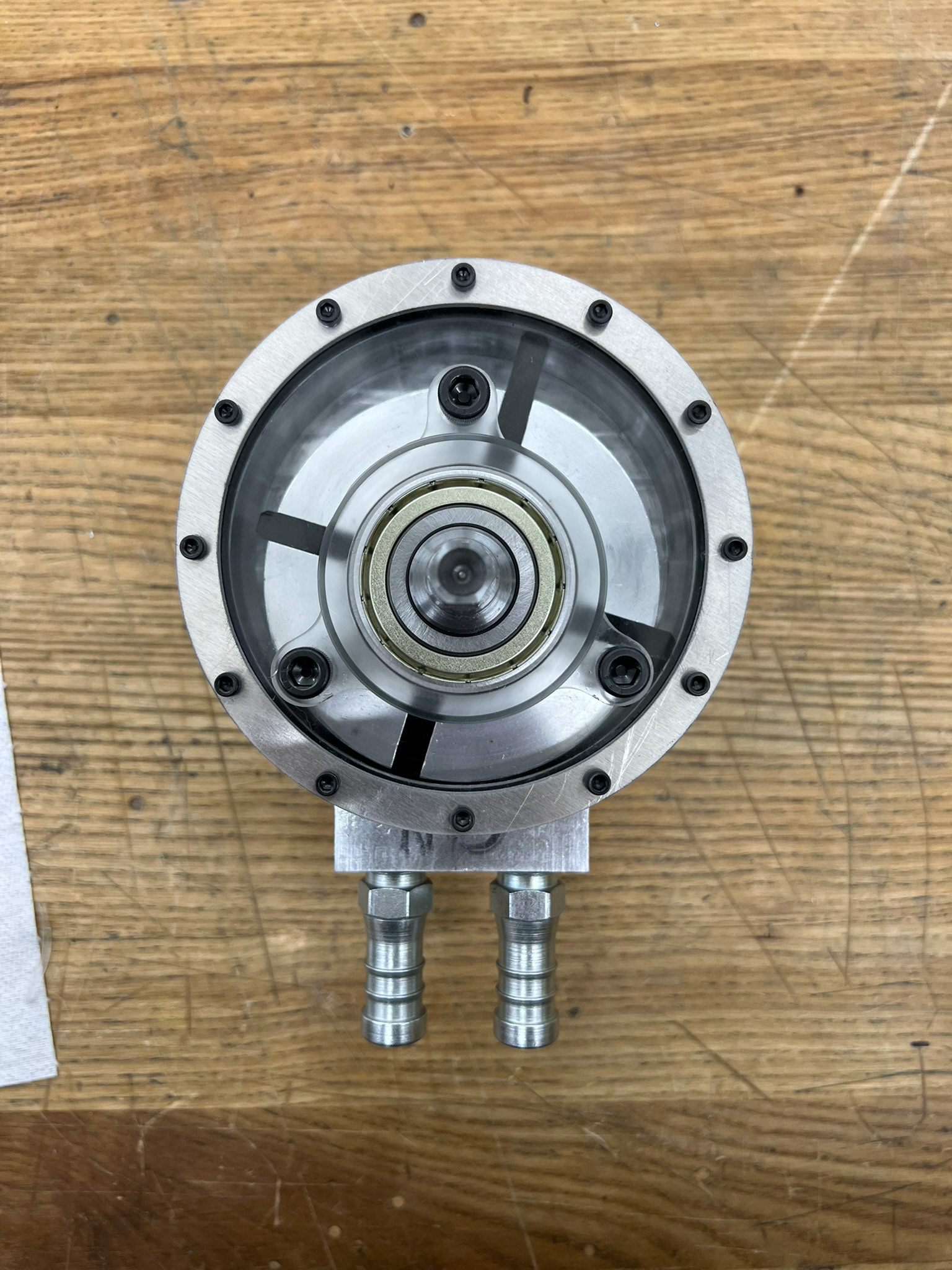
To start the project, I machined and assembled the rotary vane pump shown below from provided drawings. This pump was intentionally poorly designed, with incomplete documentation, unnecessary tolerances, and inefficient manufacturing choices. Although the pump is low-efficiency and not intended for scaled production, the clear acrylic housing effectively illustrates rotary vane operation and basic design. The build also provided hands-on experience with manufacturing processes including CNC milling, tight-tolerance manual milling, waterjet cutting, and sand casting.
In a team of three, we were assigned to design a new rotary vane pump to move liquid ammonia through a manufacturing facility. Unique specifications included an operating temperature of -50 °F, outlet pressure of 8 atm, rotational speed of 3600 rpm, a continuous service interval of 4,500 hours, and a production volume of 250 units per year.
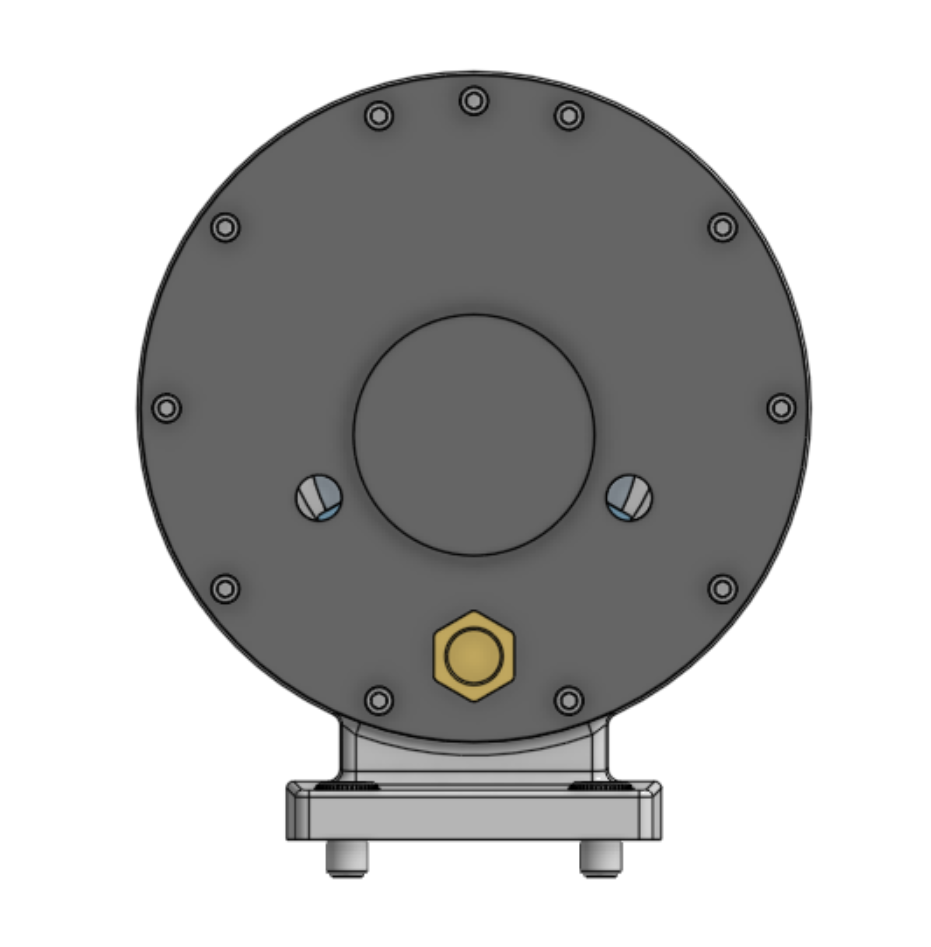
Our design prioritized safety by minimizing sealed surfaces and implementing redundant sealing. Primary and backup O-rings and shaft seals were utilized with built in ports for commercial ammonia sensors to be installed between the seals. Other major design choices included redesigned inlet and outlet porting to maximize fluid transport, an integrated sand-cast base, and a dry-running ball bearing located inside the housing.
We prioritized strength and chemical compatibility over cost and selected 316 stainless steel for the pump housing, rotor, and shaft. Vanes were specified as Torlon 4310, an industry-standard material and one of the few candidates we calculated could withstand six months of continuous operation. The stainless-steel shaft design required shaft sleeves used with PTFE shaft seals. We also specified PEEK bearings with ceramic balls and EPDM O-rings for chemical and low-temperature resistance. Bearing selection was particularly challenging because the high operating speed, low temperature, and long service interval excluded most commercially available options.
The video and images below show our redesigned pump as modeled in Onshape.
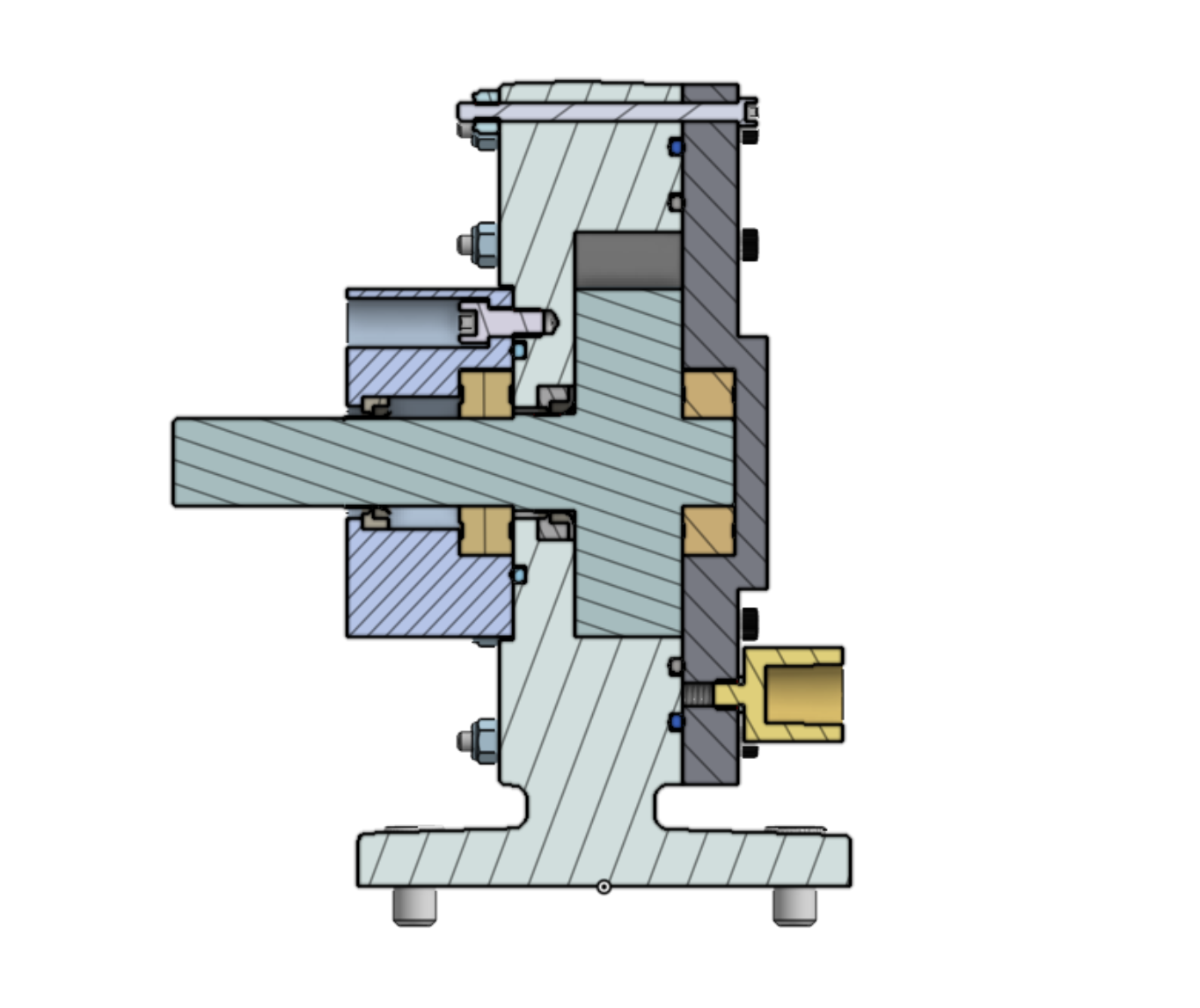
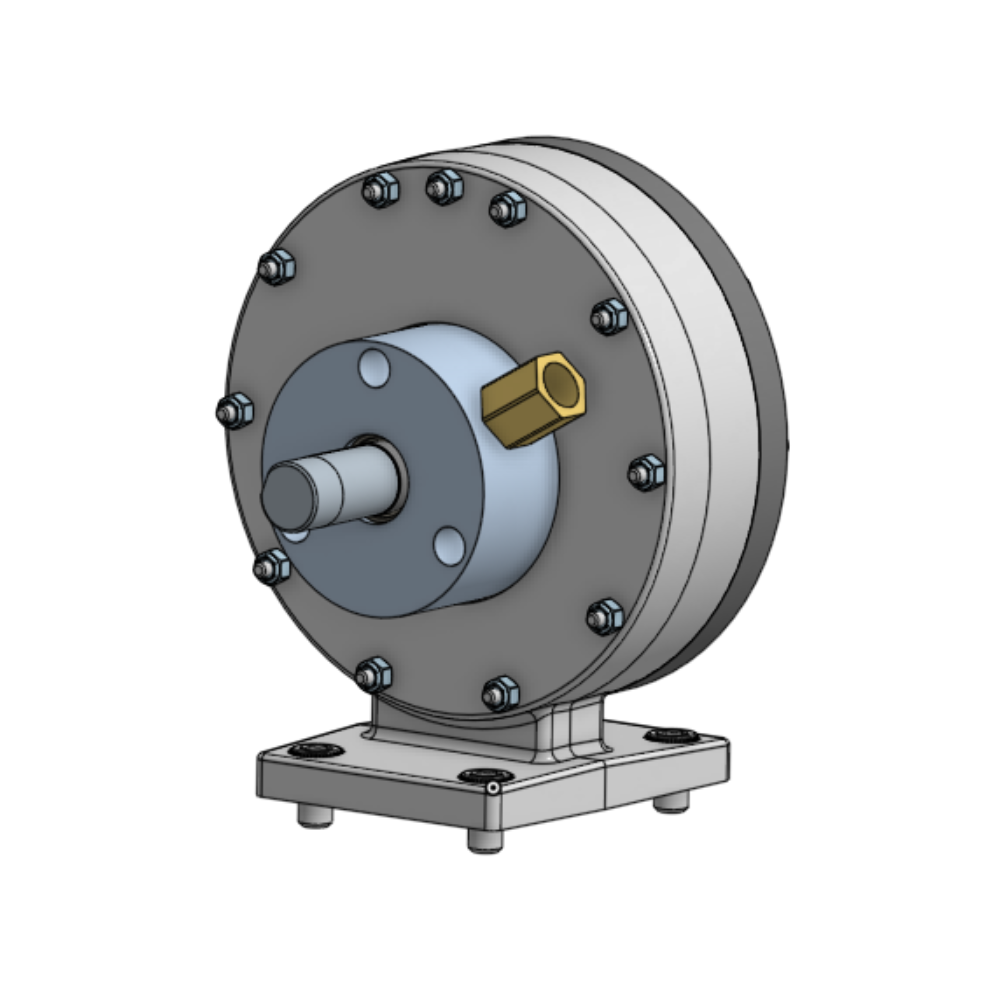
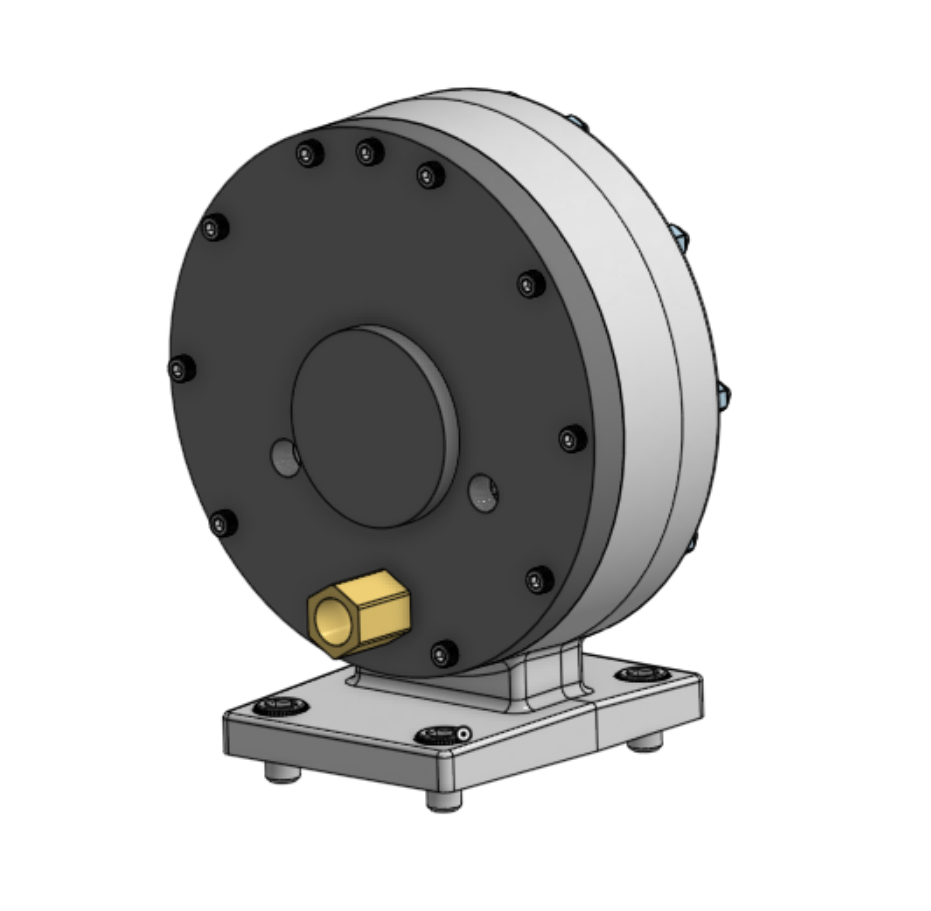
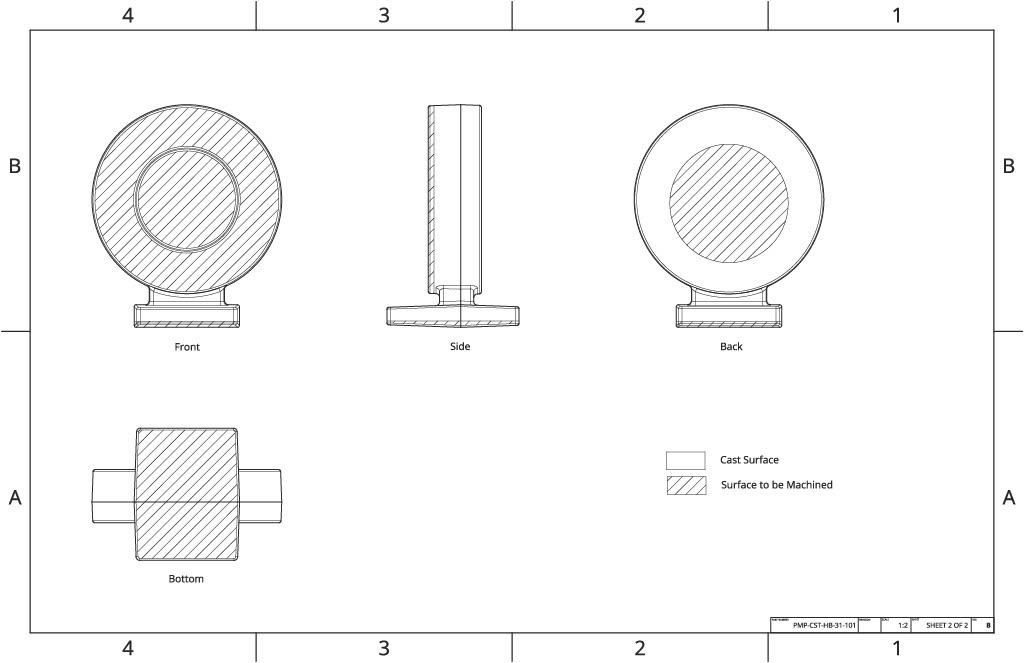
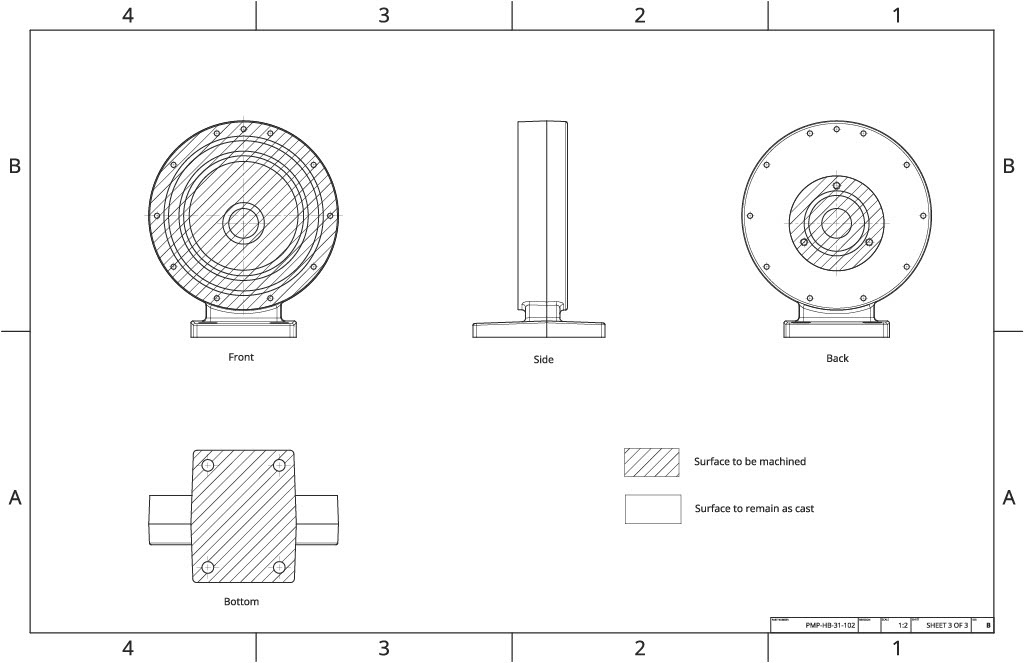
Although cost estimates indicated machining all parts was cost-effective at the projected annual volume, we selected sand casting for the pump housing because the cost was similar and it provided an opportunity to practice designing and creating drawings for a cast part.
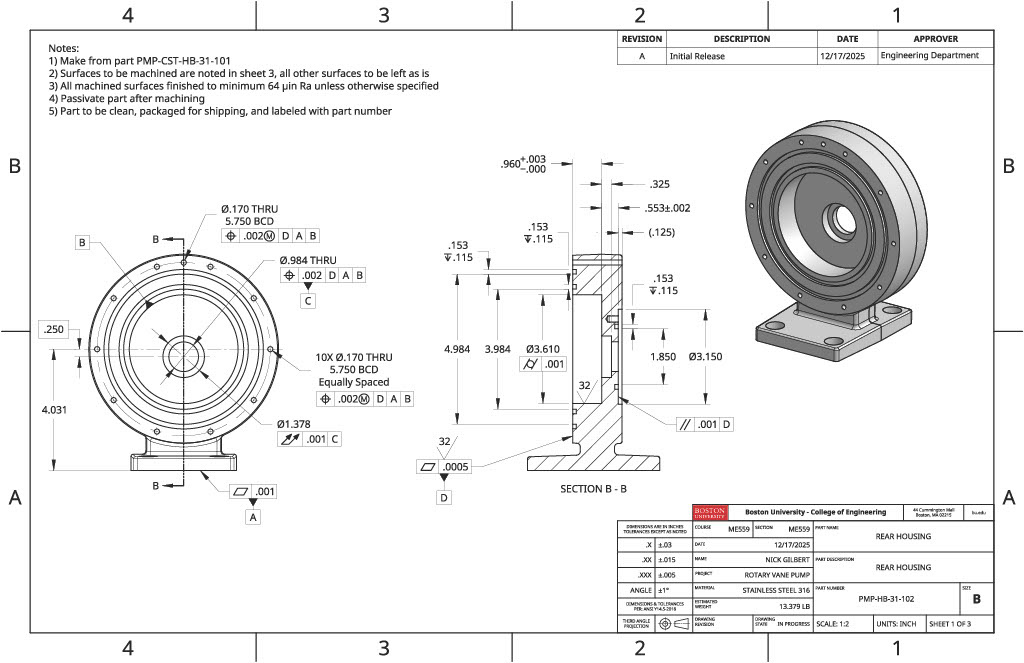
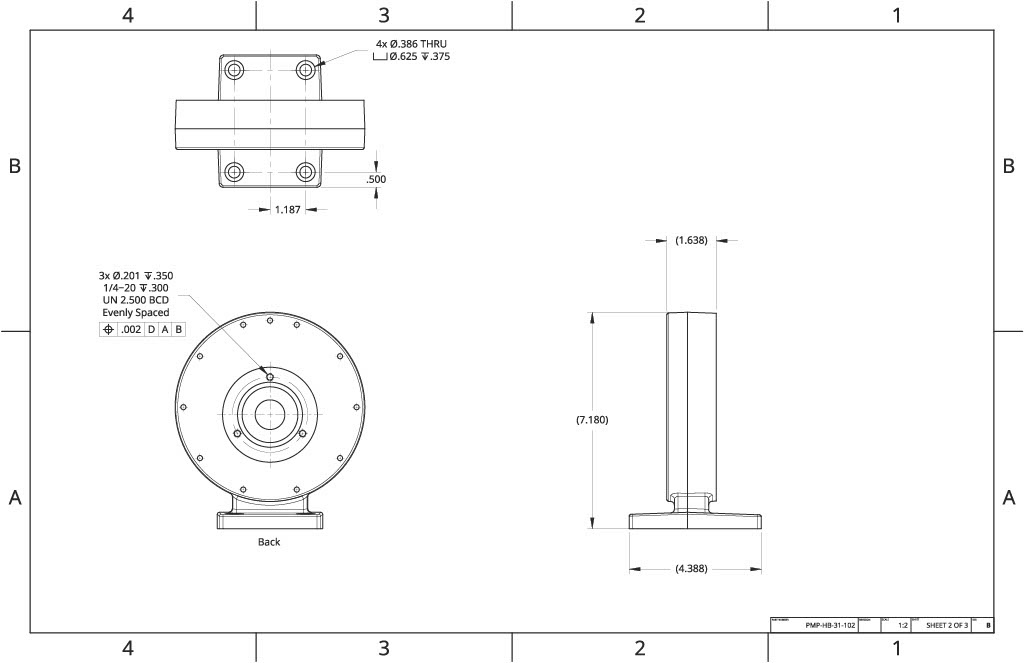
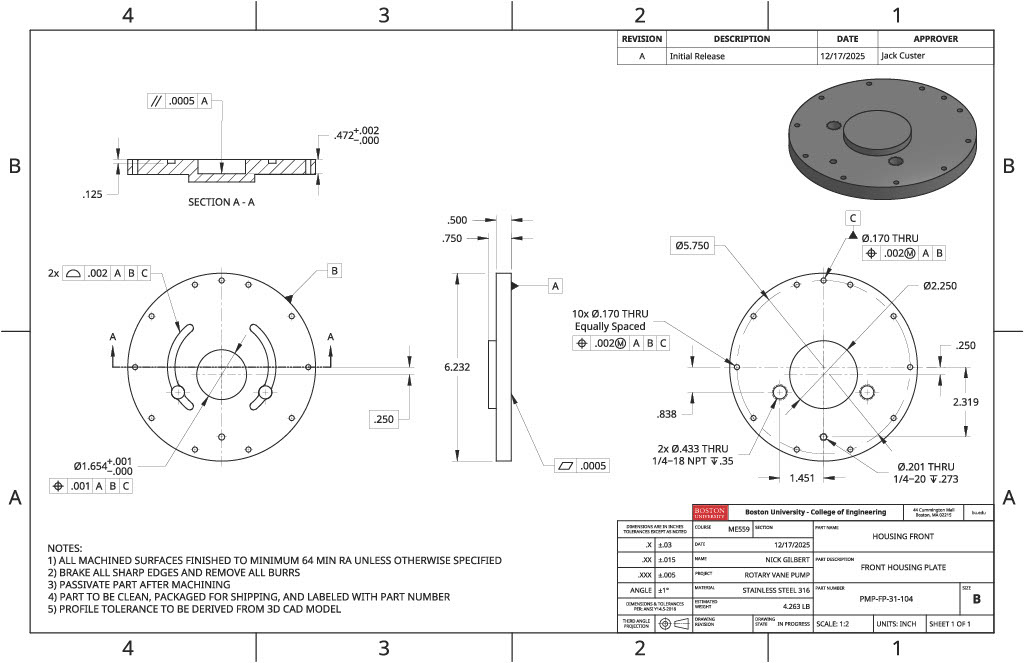
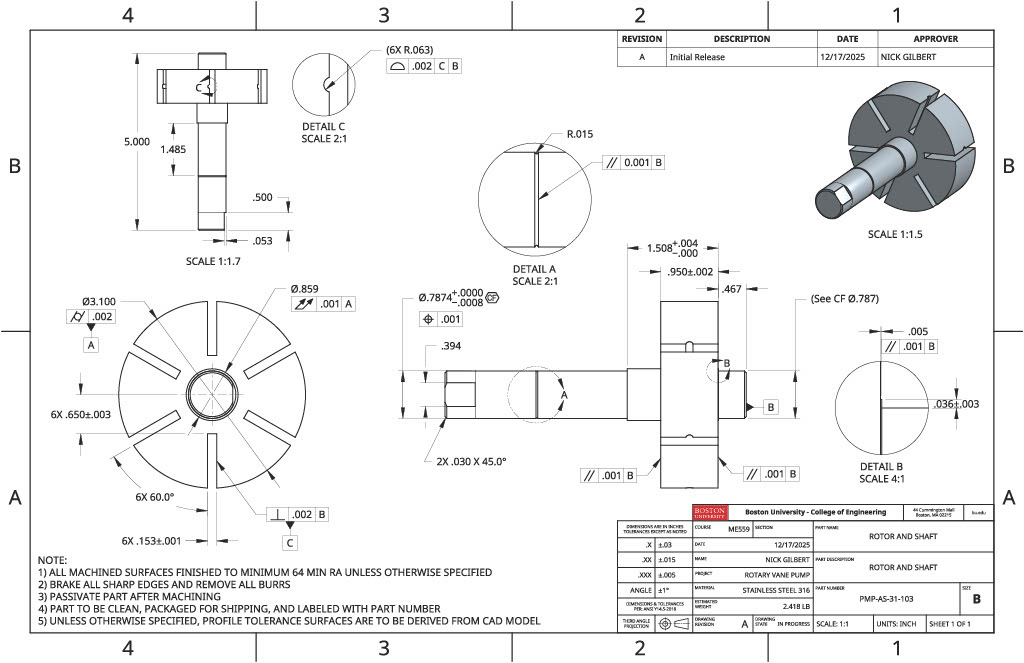
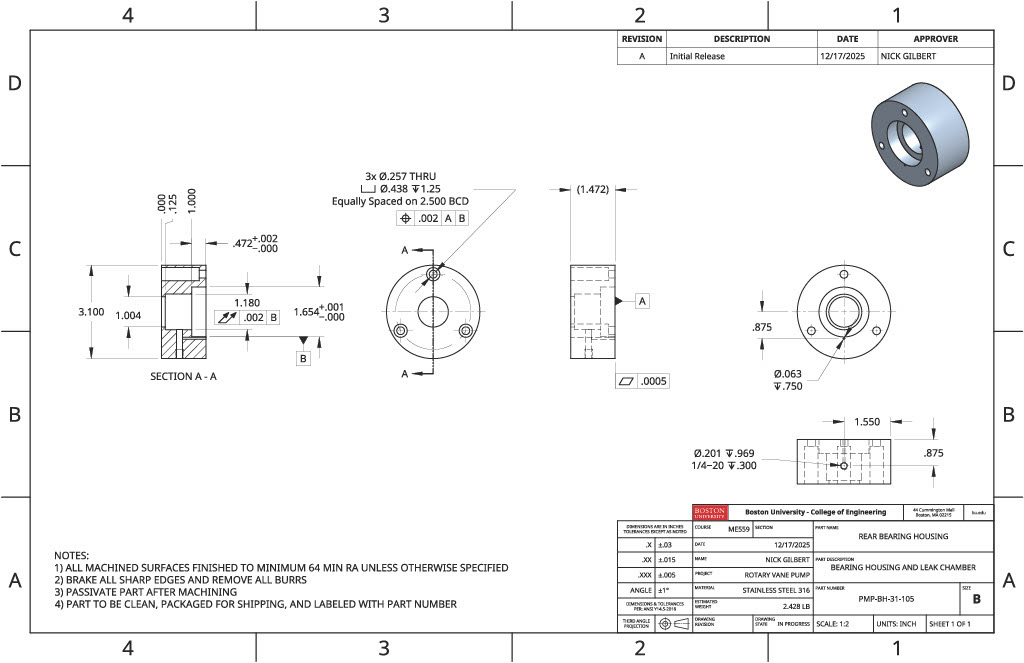
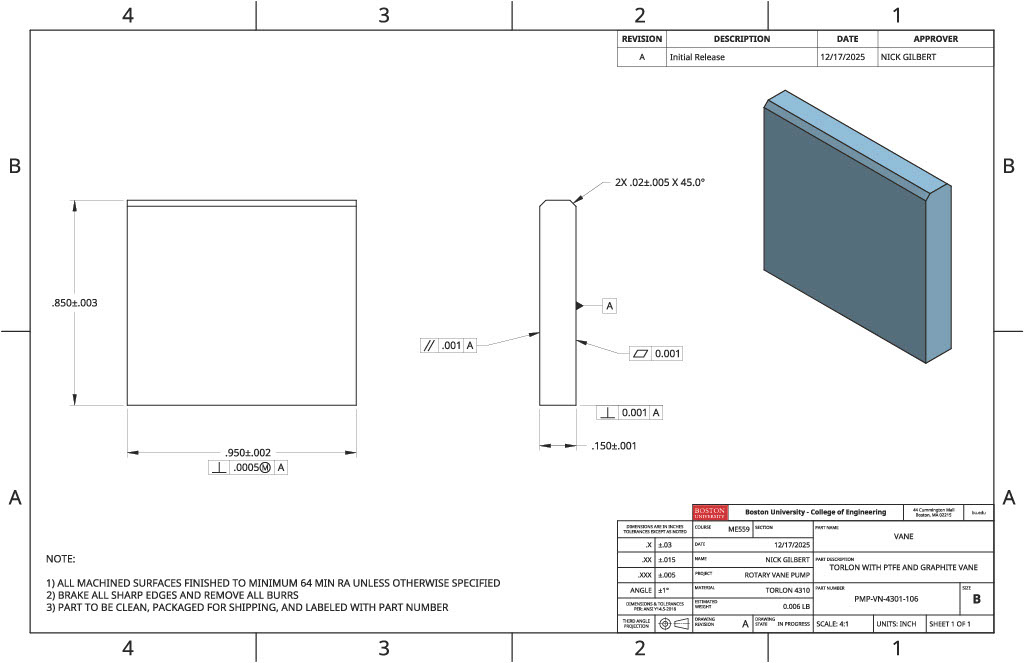
We used an RMS (root mean square) tolerance stack-up to ensure gaps between moving parts were maintained. We also accounted for differential thermal contraction of stainless steel and Torlon to ensure no interference between parts at both room temperature and at the −50 °F operating temperature.
The tolerances in our drawings resulted from this analysis, and we applied GD&T (Geometric Dimensioning and Tolerancing) to control size, location, form, and orientation of critical features. We kept looser tolerances where dimension control was not critical, and in some cases used GD&T to increase allowable variation and improve yield compared to conventional tolerancing.
Our drawings for all manufactured parts (COTS excluded) are shown below. Step by step assembly instructions are shown at the top of the page.
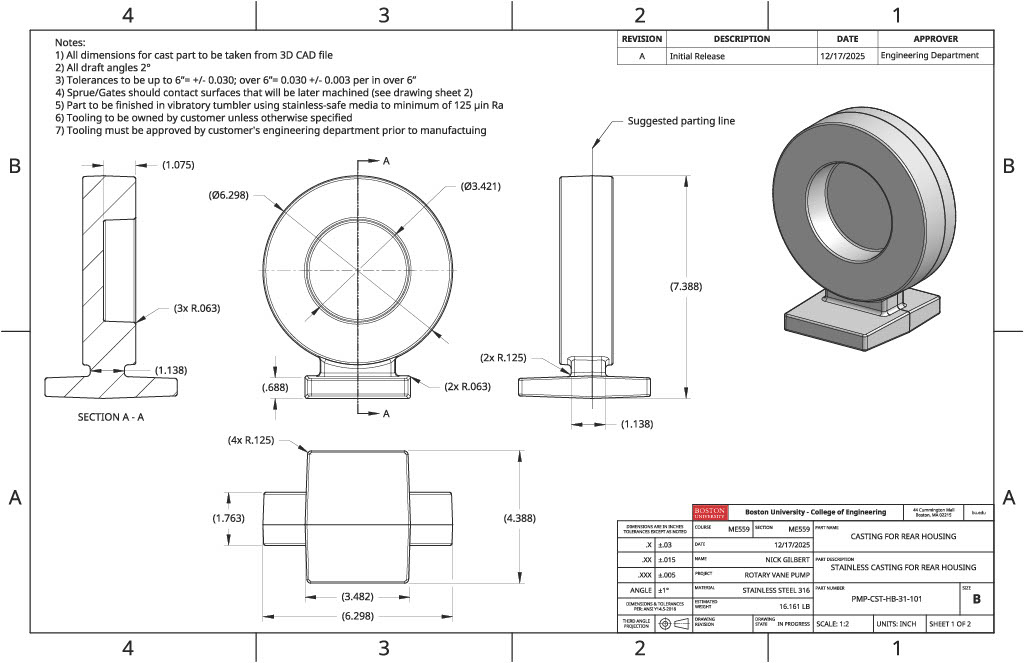
Overall, this project provided invaluable insights into the intricacies of manufacturing processes, highlighting the significance of precise material selection and effective communication through detailed drawings and drafting. By integrating these elements, I gained a deeper appreciation for how thoughtful design choices can enhance product functionality and manufacturability.